

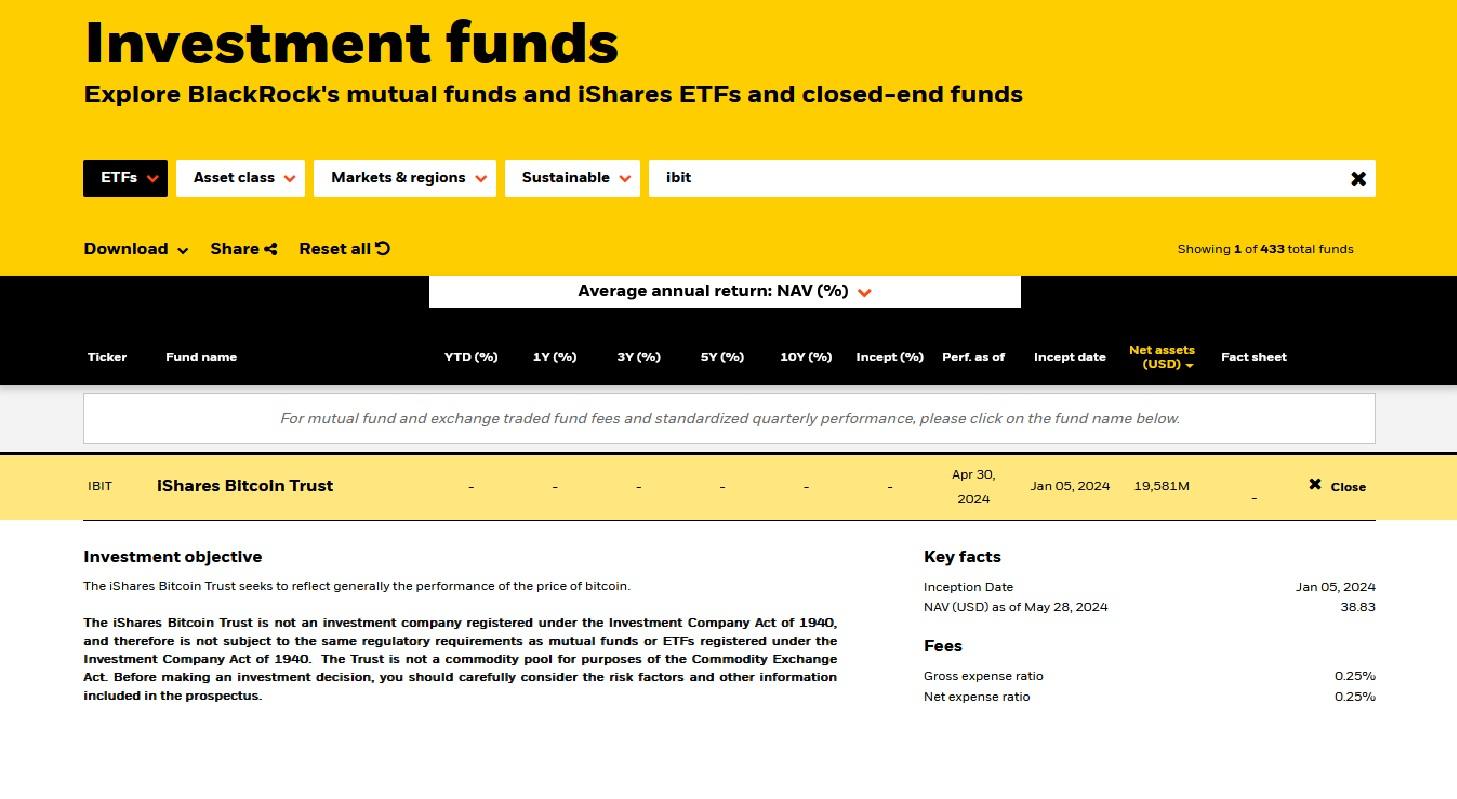
U.S. spot Bitcoin ETFs have shed nearly $1 billion in outflows since May 16, with BlackRock’s IBIT alone accounting for $448 million in a single day, according to SoSoValue data.
Bitcoin dropped from roughly $82,000 to around $77,000 over the same period, while the total crypto market cap fell over $100 billion to $2.65 trillion.
Goldman’s quiet exit
Goldman Sachs’ Q1 2026 13F filing revealed a complete exit from XRP and Solana ETF positions, down from roughly $154 million in XRP ETF exposure at the end of Q4 2025.
The bank had spread that $154 million across four XRP products from Bitwise, Franklin, Grayscale, and 21Shares, making it the largest disclosed institutional investor in spot XRP ETFs at the time.
Despite the exit, Goldman did not abandon crypto entirely — the same filing shows the firm holding multiple iShares Ethereum Trust positions worth a combined roughly $177 million, plus hundreds of millions in Bitcoin through the iShares Bitcoin Trust ETF.
The move reflects a rotation out of newer altcoin ETPs and into crypto infrastructure plays like Circle, Coinbase, and Galaxy Digital.
What’s driving the outflows
Analysts point to two main catalysts behind the ETF outflows:
U.S. inflation data that shifted expectations toward a Fed rate hike, and renewed geopolitical anxiety tied to the U.S.-Iran conflict.
Fear
The Bitcoin Fear and Greed Index has dropped to 25, signaling “Extreme Fear” among investors.
Despite the bearish sentiment, Illia Otychenko of CEX.IO noted that long-term holders “have continued accumulating BTC consistently for months,” which he said is “limiting Bitcoin’s downside potential” and reflects “long-term conviction” despite short-term volatility.