
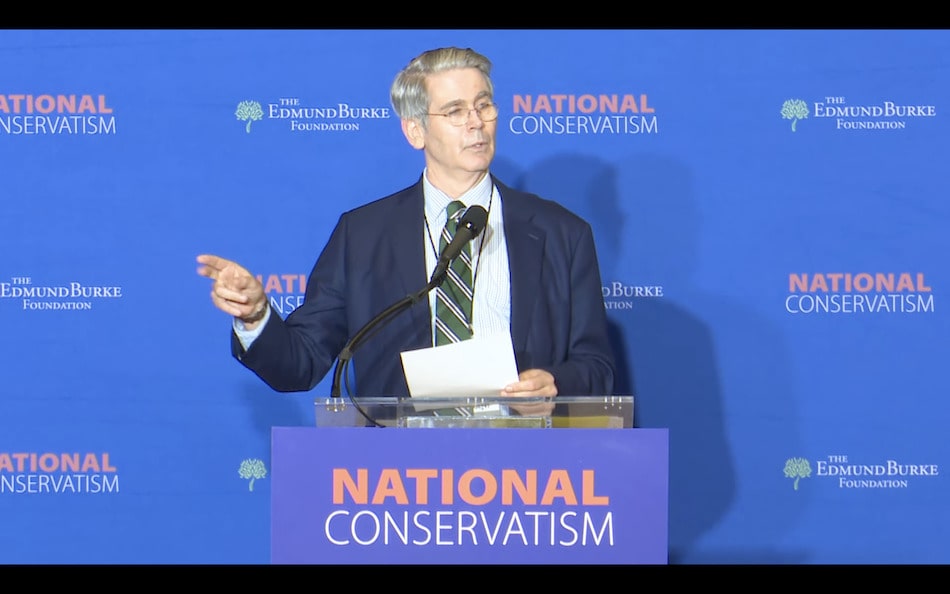
Treasury Secretary Scott Bessent confirmed on Thursday that the Trump administration will not pursue a central bank digital currency, calling the idea a threat to financial privacy and declaring it taken off the table.
No digital dollar
Speaking at a White House briefing, Bessent framed the CBDC rejection in stark terms:
“The current administration has clearly stated that there will be no central bank digital currency. It would be the first step towards surveillance, so we have excluded this option from discussion.”
This position has been consistent since January 2025, when a White House directive formally abandoned the idea of a Fed-issued digital currency in favor of private dollar stablecoins.
Bessent had also publicly rejected CBDCs during his Senate confirmation hearings, and in February 2026 argued that global markets would choose dollar stablecoins over state-issued digital currencies.
Push for the Clarity Act
Alongside the CBDC remarks, Bessent urged Congress to pass the CLARITY Act, warning that regulatory uncertainty is already pushing developers and capital toward Singapore and Abu Dhabi.
He said:
“When you look at digital assets, all the nonsense that happens, all the things you read about, that’s because it’s the wild, wild west offshore. So we got to bring it on shore.”
The CLARITY Act cleared the Senate Banking Committee earlier this month with bipartisan support, though two Democratic senators who voted in favor cautioned their final votes are not guaranteed.
SEC Chair Paul Atkins also signaled a shift in tone, saying the era of the agency being “at odds with new technology and innovation” is over.
Stablecoin framework already moving
The administration has been building out its crypto regulatory agenda on multiple fronts.
In July 2025, Trump signed the GENIUS Act into law, establishing the first formal stablecoin regulatory framework in the United States.
Bessent has described stablecoins as a “revolution” in digital finance, arguing they can reinforce the dollar’s global dominance and support demand for U.S. Treasury bonds.