
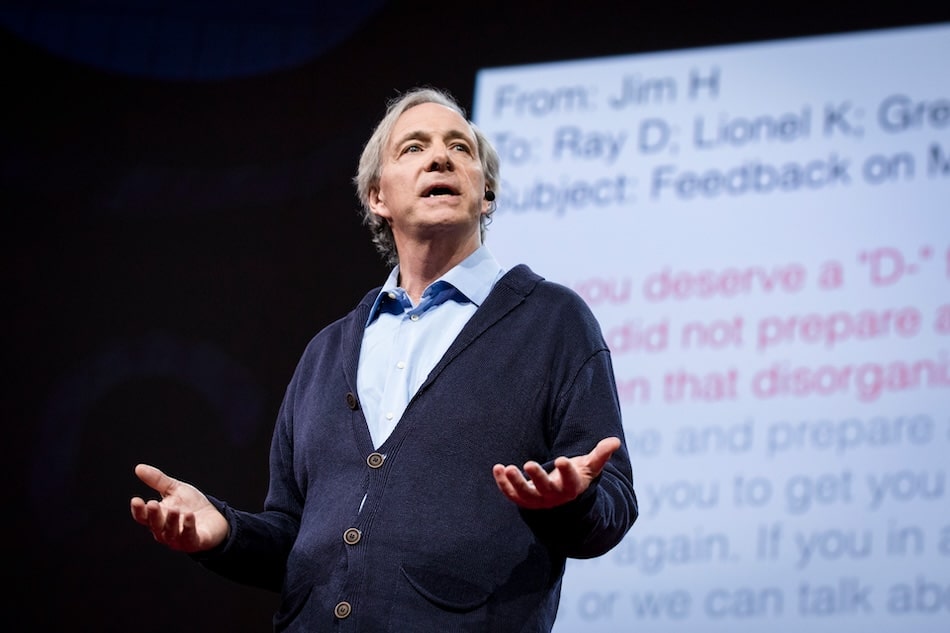
Bridgewater Associates founder Ray Dalio, writing in TIME, argues that markets and most observers are missing the bigger picture:
The world is not heading back to “normal” after the U.S.-Israel-Iran conflict, but is instead entering the early stages of a prolonged world war.
Interconnected conflicts
Dalio points to a web of active shooting wars — Ukraine-Russia, Israel-Gaza-Lebanon-Syria, Yemen-Sudan, and the U.S.-Israel-Iran conflict — alongside non-shooting economic, trade, and technology wars.
He argues these together form a classic world war dynamic, one that historically has never required a single clear start date or formal declaration.
“I wish it were not true, but I fear we are entering a world war.”
Countries are taking sides
Dalio sees China, Russia, Iran, North Korea, Cuba, and Venezuela on one side, opposed by the U.S., Ukraine, most of Europe, Israel, Japan, and Australia.
He notes that China consumes 80–90% of Iran’s oil output, and its relationship with Russia ensures continued energy supply, making China and Russia relative economic winners from the current conflict.
This matters for bitcoin investors because Dalio’s 13-step historical pattern includes massive increases in debt issuance, money printing, capital controls, and financial repression to finance wars — conditions that have historically driven demand for hard assets like bitcoin.
History repeating
Dalio outlines a 13-step pattern he says has repeated throughout history, moving from economic skirmishes to full military conflict between major powers.
The early stages look familiar: economic sanctions and trade blockages, rising deficits, and a scramble to build powerful new military technologies:
“Big increases in economic wars take the form of economic sanctions and trade blockages.”
As dominant powers stretch themselves thin, their finances deteriorate — and history shows they respond the same way every time:
“Financial stress, deficits, and debts increase, especially for the leading powers that are most overextended financially.”
Multi-theater conflicts begin happening simultaneously, governments demand loyalty while suppressing dissent at home, and trade chokepoints get weaponized. Eventually the financial system itself becomes a war tool:
“There are big increases in taxes, debt issuance, money creation, FX controls, capital controls, and financial repression to finance the wars. In some cases, markets are shut down.”
Implications for hard assets
Dalio closes by saying he does not know whether things will escalate to all-out world war, but warns that the classic dynamic at this stage is for conflicts to intensify rather than subside.