
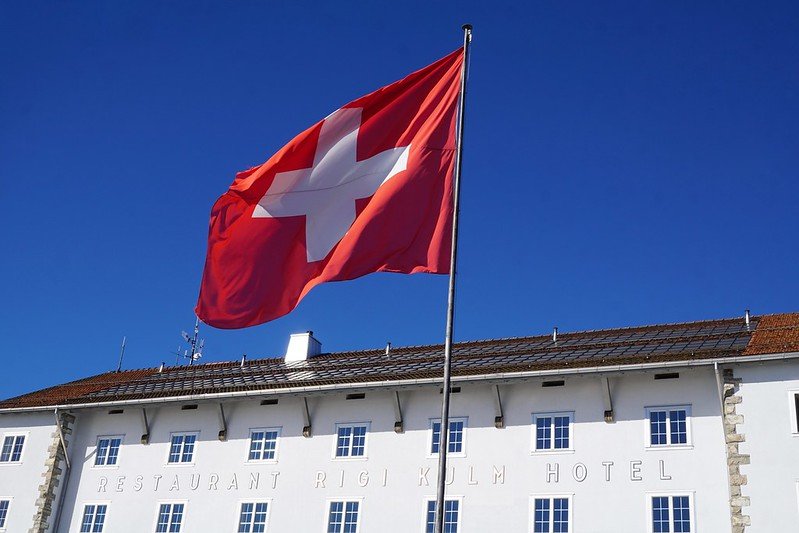
Shops and restaurants throughout Lugano, Switzerland, now accept bitcoin for payments, marking the city as a leader in bitcoin adoption for everyday transactions.
Over 350 establishments, including major chains and luxury retailers, have integrated bitcoin payment terminals distributed by the city council, allowing customers to pay directly from their bitcoin wallets.
Everyday use and business adoption
While most people see bitcoin as an investment rather than a means of payment, Lugano’s approach is changing that perception.
Residents and visitors can use bitcoin not just in shops and restaurants, but also to pay for municipal services, such as childcare.
Shop owners like Cherubino Fry cite lower transaction fees—generally below 1% for bitcoin compared to up to 3.4% for credit cards—as an incentive.
Fry explained his outlook:
“In reality, not a lot. For now, only sporadically, only some clients. But using bitcoin will be like a tree growing, and this tree will grow very big in five, 10 years.”
Plan b initiative and real-world challenges
Lugano’s ‘Plan B’ initiative, launched in partnership with Tether, aims to make the city a European bitcoin hub.
Director Mir Liponi shared her experience using only bitcoin for 11 days due to banking issues, highlighting that most daily needs can be met except for public transport and utility bills.
Liponi hopes for “circular economies where people earn bitcoin, keep bitcoin, spend bitcoin, pay for services in bitcoin.”
Contrasting global examples
Lugano’s model stands in contrast to El Salvador, where despite making bitcoin legal tender in 2021, actual usage remains limited.
Other cities like Ljubljana and Zurich also report successful adoption, though implementation varies widely.
local skepticism and risks
Not all locals are enthusiastic.
Some, like university student Lucia, associate bitcoin with speculation and crime.
Professor Sergio Rossi warns of volatility and custodial risks, advising merchants to convert bitcoin to Swiss francs immediately. He noted:
“If the platform where my digital wallet is recorded fails or goes bankrupt, my cryptocurrencies disappear instantaneously.”
Mayor Michele Foletti downplayed concerns about illicit finance, stating that cash, not bitcoin, is preferred for money laundering.
He emphasized that the city has seen 110 bitcoin-related companies start up or relocate to Lugano, signaling ongoing growth.