

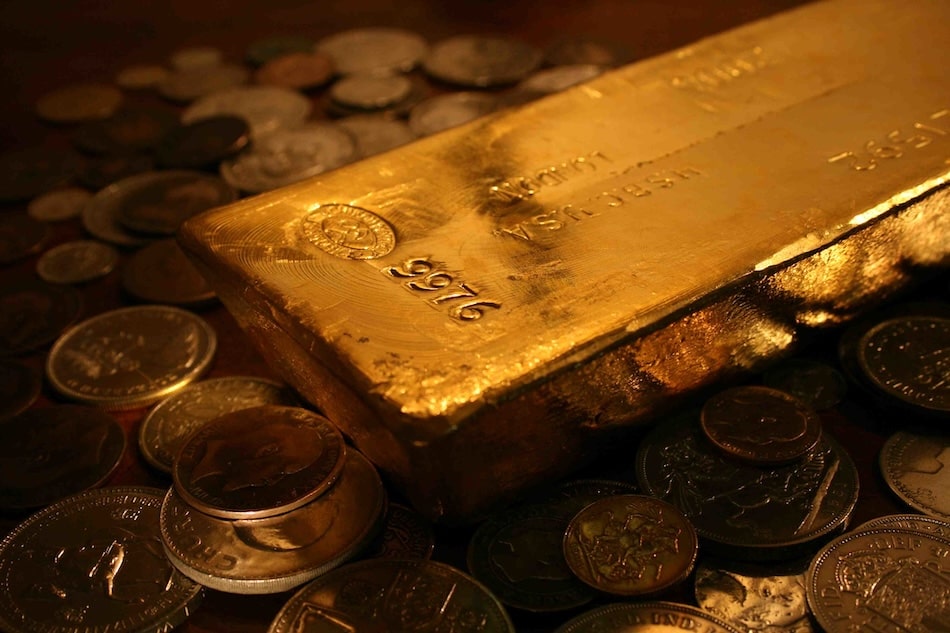
Gold climbed above $5,000 an ounce for the first time, extending a rally that saw the metal rise more than 60% in 2025.
The move came as tensions between the US and NATO over Greenland added to broader financial and geopolitical uncertainty.
US President Donald Trump’s trade policies also weighed on markets, including a Saturday threat to impose a 100% tariff on Canada if it strikes a trade deal with China.
Prices and the flight to safety
Spot gold gained 2.4% to trade at $5,102 an ounce before easing to $5,086.
US gold futures for February rose 2.1% to $5,087.
Silver also rallied, with spot prices up 4.9% to $107.9 an ounce after topping $100 on Friday for the first time.
What is driving demand
Analysts pointed to higher-than-usual inflation, a weaker US dollar, central-bank buying, and expectations that the US Federal Reserve will cut interest rates again this year.
The Fed is widely expected to cut its main interest rate twice this year.
Nicholas Frappell, global head of institutional markets at ABC Refinery, said:
“When you own gold, it’s not attached to the debt of somebody else like a bond is or an equity where the performance of a company will drive performance.”
Scarcity and central-bank buying
Only around 216,265 tonnes of gold have ever been mined, according to the World Gold Council.
The US Geological Survey estimates another 64,000 tonnes could still be mined from underground reserves, though supply is expected to plateau.
Central banks added hundreds of tons of bullion to reserves last year, the World Gold Council said.
Morgan Stanley estimated Indian households held $3.8tn of gold, equivalent to 88.8% of India’s GDP.