
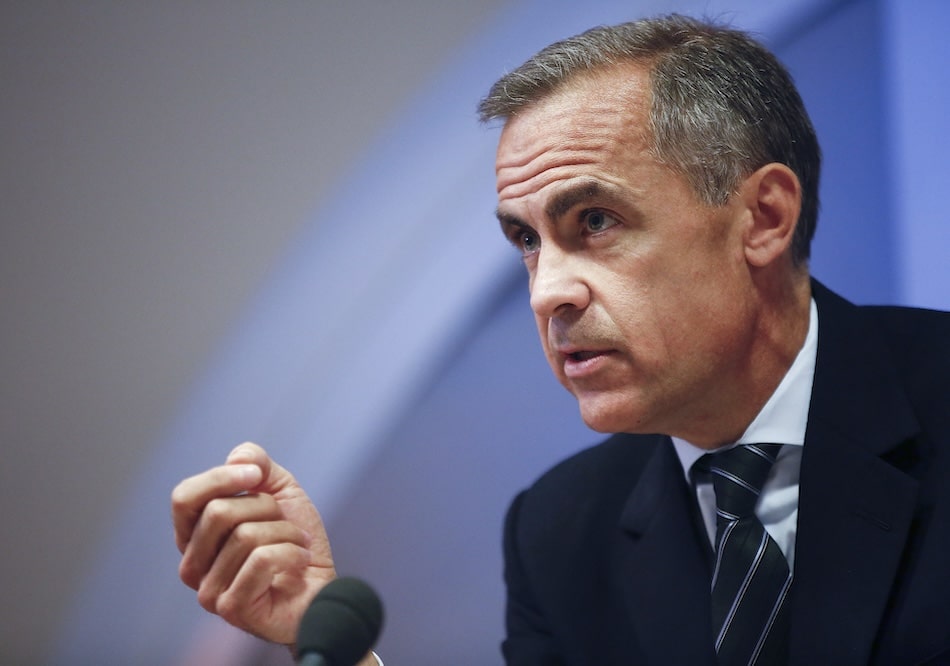
Canadian Prime Minister Mark Carney warned at the World Economic Forum in Davos on Jan. 20 that the international rules-based order is breaking down, describing the moment as a “rupture” rather than a transition.
A ‘pleasant fiction’ breaks down
Carney argued the system was always imperfect, with rules applied unevenly based on military and economic power.
He said US hegemony still provided “public goods” including open sea lanes, a stable financial system, and dispute-resolution frameworks.
Carney told the Davos audience:
“We knew the story of the international rules-based order was partially false, that the strongest would exempt themselves when convenient, that trade rules were enforced asymmetrically.”
He added that countries had “participated in the rituals” while avoiding the gaps between rhetoric and reality.
Tariffs and finance as market variables
Carney said great powers are increasingly using integration as a weapon, with tariffs used as leverage and financial infrastructure used as coercion.
For traders, that framing points to higher policy-driven volatility and faster repricing of cross-border risk, especially around trade rules, sanctions exposure, and funding conditions.
Canada caught in US pressure
Carney referenced threats beyond Washington’s pressure around Greenland.
The report noted US President Donald Trump has previously referred to Carney as Canada’s “governor” and repeated comments about making Canada the 51st US state.
Trump, speaking at Davos on Wednesday, said “Canada lives because of the United States” and criticized Carney’s lack of gratefulness.
Middle powers and a ‘third path’
Carney urged “middle powers” to coordinate rather than compete for favor.
He said:
“[W]e argue the middle powers must act together because if we’re not at the table, we’re on the menu.”